

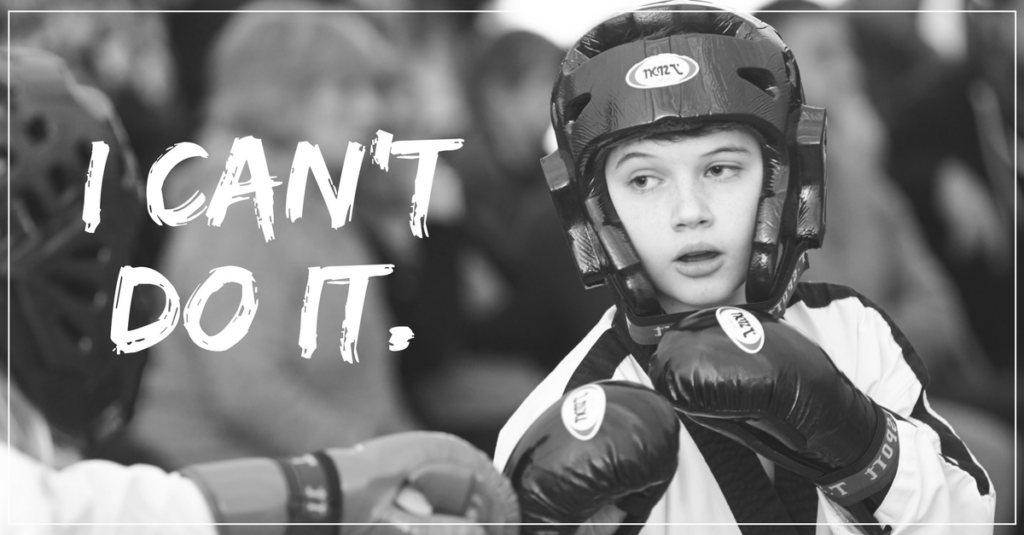
“I can’t do it!” Every parent has heard it. The homework thrown across the table, the puzzle abandoned halfway, the bike left on the drive. Children getting frustrated with challenging tasks and walking away is completely normal. But how we respond in that moment can shape whether our child learns to give up or learns to keep going.
In this guide we explain why children say “I can’t do it”, what a growth mindset is, and the simple things parents in Dubai and Abu Dhabi can say and do to turn “I can’t” into “I can’t yet”, and eventually “I can do it!”
Why children say “I can’t do it”
When a child says “I can’t do it”, they rarely mean it literally. Usually they mean one of these:
- “This is hard and I feel uncomfortable.” Struggle feels bad, and children want the feeling to stop.
- “I’m scared of getting it wrong.” Some children would rather not try than try and fail.
- “I’m tired or overwhelmed.” The task feels too big all at once.
- “I want help.” Sometimes it is simply a request for support.
Working out which one it is helps you choose the right response.
What is a growth mindset?
A growth mindset is the belief that abilities can be developed through effort, practice and good strategies. A fixed mindset is the belief that you are either good at something or you are not.
A child with a fixed mindset hears “I can’t do it” as a final answer. A child with a growth mindset hears it as “I can’t do it yet”. That one small word changes everything. It turns a dead end into a starting point.
The good news is that mindset can be taught. Children learn it from the words they hear, the way effort is praised and, most of all, from experiencing for themselves that practice works.
What to say when your child says “I can’t do it”
1. Add the word “yet”
Calmly reply, “You can’t do it yet.” It acknowledges the struggle while reminding them it is temporary.
2. Acknowledge the feeling
“This is really frustrating, isn’t it?” Children calm down faster when they feel understood. Only then are they ready to try again.
3. Break it into smaller steps
“Let’s just do the first bit together.” Big tasks overwhelm. A small first step is much easier to start.
4. Remind them of past success
“Remember when you couldn’t ride your bike? Now look at you.” Proof from their own life is more convincing than anything you can say.
5. Praise effort and strategy
Instead of “You’re so clever”, try “You kept going and tried a different way. That’s why it worked.” This teaches children that effort is what makes the difference.
6. Let them struggle a little
Resist the urge to jump in and fix it. A little struggle is where learning happens. Offer a hint, not the answer.
What to avoid
- Doing it for them. It ends the frustration but teaches them they can’t do it.
- “It’s easy!” If it is easy and they can’t do it, what does that say about them?
- Labels. “She’s just not sporty” or “he’s not a maths person” become beliefs children carry for years.
Age by age: building an “I can do it” attitude
Ages 4 to 6
- Use play: building blocks, puzzles and balance games are perfect for practising persistence.
- Celebrate small wins loudly.
- Model it yourself: “Oops, that didn’t work. Let me try again.”
Ages 7 to 9
- Introduce the idea of the brain growing stronger with practice, like a muscle.
- Set short challenges with a clear finish line, such as practising one skill for five minutes a day for a week.
- Ask, “What could you try next?” rather than giving the answer.
Ages 10 to 13
- Talk about the difference between a fixed and a growth mindset openly.
- Help them notice their own self talk and swap “I can’t” for “I can’t yet”.
- Let them set their own challenges and track progress.
Teenagers
- Share stories of people who struggled before they succeeded.
- Encourage them to take on things they might not be good at straight away.
- Praise the courage it takes to try, not just the outcome.
How The Warrior Academy turns “I can’t” into “I can”
Learning in a martial arts setting is very different from the classroom. Children are not sat down and told, “Today we are going to learn perseverance.” Instead, the lessons are part of the whole experience, in an environment that is fun, structured, challenging and rewarding.
Life skills on the journey to black belt. Our students learn different life skills throughout the year as part of their journey from white belt to black belt. Our character development curriculum presents these skills as challenges and goals. Every child is an individual, so many challenges are personal to them.
Challenges with recognition. If a child is struggling with a move, their instructor might set them a challenge to practise it at home using WarriorNet, our online training platform, then come back and show how much they have improved. Knowing their effort will be recognised in front of the group, children keep going until they get it, and each challenge moves them closer to their next belt.
Children involved in their own goals. Parents and students can set goals too. When a child helps choose what they want to achieve, they take responsibility for it, and with responsibility, however small, children grow.
Small, measurable goals and happy warriors. Children are always keen to repeat a good experience. Once they have achieved something they struggled with and felt that joy and recognition, they bring the same perseverance to school, sport and home. You can read how this works in The Warrior Method.
Our programmes run for ages 2 to adult, from junior martial arts for younger children through to pre-teens and teens. Have a look at our success stories to see what families have experienced.
Frequently asked questions
Why does my child give up so easily?
Usually because the task feels too big, they are scared of getting it wrong or they have not yet experienced how practice leads to progress. Smaller steps and plenty of praise for effort help.
Can you really teach a growth mindset?
Yes. Children pick up mindset from the language around them and from their own experience of improving through practice. Consistent “yet” language and effort-based praise make a real difference.
How does martial arts help a child who says “I can’t do it”?
The belt system breaks big goals into small, achievable steps. Each step gives children proof that practice works, which builds the belief that they can do hard things.
Take the next step
Want to know where your child could grow the most? Take our free Breakthrough Area assessment for practical next steps. When you are ready to hear “I can do it!”, book a VIP Pass at your nearest academy in Al Quoz, Arjan, Jumeirah Islands or Abu Dhabi.