

Table of Contents
Conflict is an unavoidable part of life, from the playground to the home and workplace. However, while many people think life is like the movies, the real challenge isn’t learning how to win a fight, but understanding how to resolve conflict constructively and peacefully.
This is where martial arts training shines, providing a framework for solving disagreements calmly, with research showing that martial arts training helps regulate emotions, manage stress, and enhance conflict resolution techniques.
The Philosophy of De-escalation
A common misconception is that martial arts is about fighting. In reality, good instruction does the opposite. The foundational tenets of most disciplines, whether it’s Karate, Judo, or Taekwondo, are built on respect and self-control. The physical techniques are taught as a last resort, a means of self-defence when all other strategies and techniques for conflict resolution have been exhausted.
The ultimate goal for a true martial artist is not to seek out conflict, but to possess the peace and self-assurance to walk away from it. Martial arts teach that true strength lies in controlling one’s own reactions. This can have a profound effect on conflict resolution skills, with research showing that longer-term training reduces aggressiveness and increases good social behaviours. This mindset is key to effective conflict resolution strategies, allowing you and your children to turn a potentially volatile situation into an opportunity for understanding and growth.
Building Essential Skills for Conflict Resolution
The dojo is more than just a training floor; it’s a place for developing life skills. The discipline and focus required translate into the emotional and psychological tools needed to navigate difficult conversations. This is a central part of our philosophy at Warrior Academy, with the Warrior Method defining how we train and live.
Staying Calm Under Pressure
One of the first lessons in martial arts is learning to control your breathing and maintain focus, even when facing an opponent in a sparring match. This practice of staying centred under pressure is valuable in the ring and in life. When emotions run high, our bodies enter a ‘fight or flight’ state, making rational thought difficult.
Martial arts training conditions the mind and body to remain calm in stressful situations. Research backs this up, with Yunus and Chaudhary identifying that people who are adept at emotion regulation experience less stress and have better mental health outcomes. This ability to manage your own stress allows you to think clearly, listen, and respond rather than reacting impulsively.
Emotional Awareness and Self-Control
You cannot manage a disagreement effectively if you cannot first manage your own emotions. People who understand their emotions more clearly can quickly find strategies to cope with stress. By learning to identify and control feelings like anger or defensiveness, you prevent the conflict from escalating and create space for a more productive dialogue.
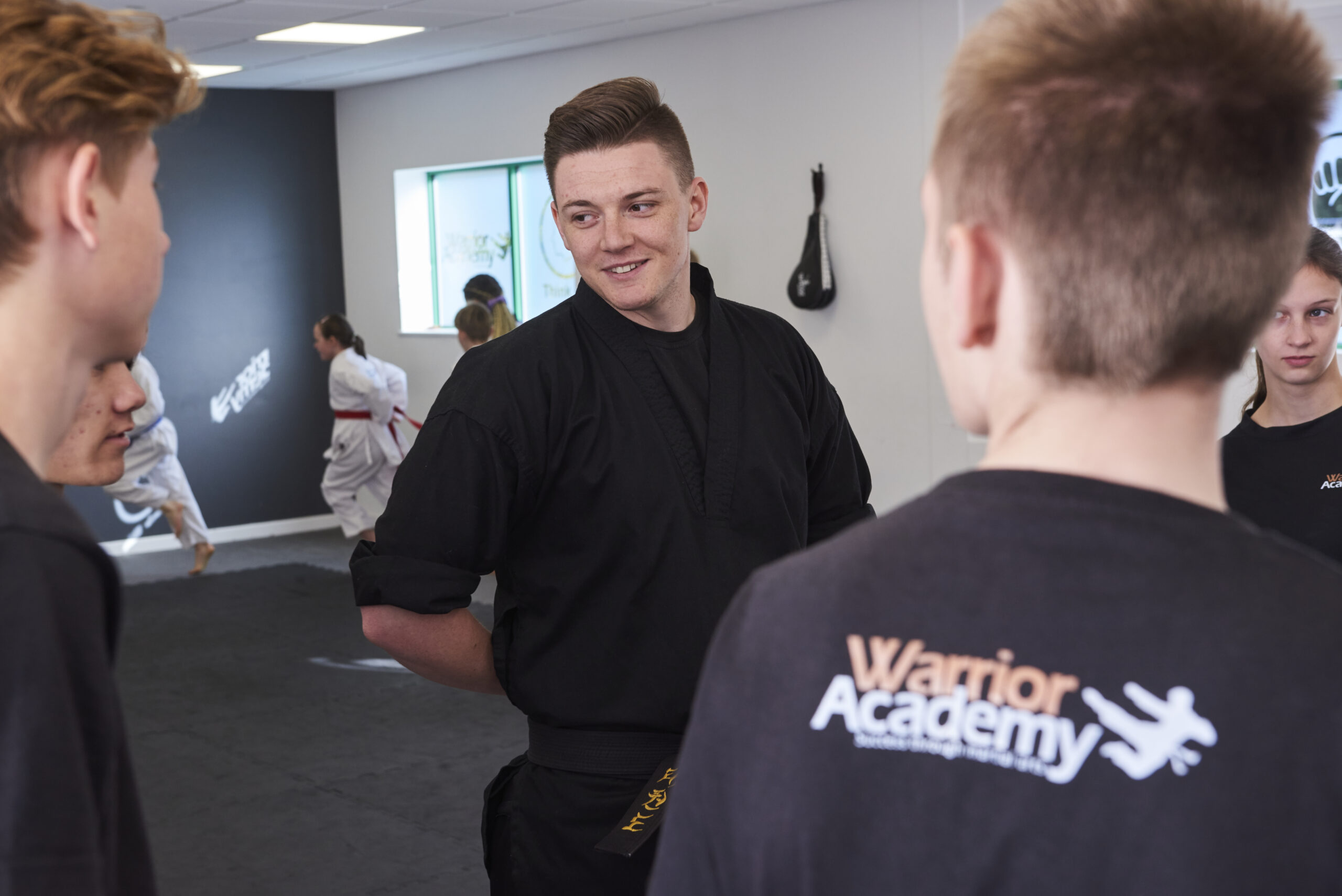
The Power of Nonverbal Communication
In sparring, a martial artist learns to anticipate an opponent’s next move by reading shifts in their posture, balance, and gaze. This is a developed form of nonverbal communication. This same skill is incredibly powerful in social interactions.
Much of what is communicated during a conflict is nonverbal: tone, facial expressions, and body language. Martial arts training attunes you to these cues, helping you to better understand the other person’s true feelings and intentions, allowing for a more empathetic and effective response.
Applying Martial Arts Principles to Real-Life Conflict
So, with this in mind, how can you or your child use these principles when a real-life disagreement arises? Here is a helpful guide (using the dojo metaphor).
Step 1: Find Your Centre
Before you say or do anything, take a moment to breathe. Just as a martial artist assumes a ready stance before a drill, you need to centre yourself emotionally. This pause prevents a knee-jerk reaction and allows you to approach the situation with a clear head.
Step 2: Observe and Listen
The most effective martial artists are excellent observers. In a conflict, this means listening actively. Pay full attention to what the other person is saying, both with their words and their body language. Try to understand their perspective without interrupting or planning your rebuttal.
Step 3: Acknowledge Their Position
In the dojo, you bow to your partner to show respect. In a disagreement, you can do this verbally by acknowledging the other person’s feelings. Phrases like “I understand why you’re upset,” or “I can see your point of view” validate their experience and de-escalate tension, even if you don’t agree.
Step 4: State Your Needs Clearly
A kata is a precise, controlled series of movements that can be mimicked in de-escalation. When it’s your turn to speak, communicate your own feelings and needs with similar precision and control. Use “I” statements to avoid placing blame (e.g., “I feel hurt when…” instead of “You always…”).
Step 5: Work Towards a Mutual Solution
Many martial arts drills require partners to work together to improve. Modern conflict resolution strategies and techniques emphasise transformation, collaboration, and presence rather than confrontation, focusing on shared goals and mutual benefits.
Frame the conflict not as a fight to be won, but as a problem to be solved together. Brainstorm solutions where both parties can feel their needs have been met. The goal is to restore balance, not to declare a winner.
Building a Foundation for Life
At its heart, martial arts training is character development. It’s about forging individuals who are not only physically capable but also mentally and emotionally resilient. The structured environment at Warrior Academy, combined with an emphasis on respect and discipline, provides the perfect training ground for learning how to resolve conflict in a constructive way.
These are not just skills for children on the playground; they are essential tools for children, teens, and navigating complex social dynamics, for adults in their personal and professional relationships.
The confidence gained from mastering a new technique on the mat becomes the confidence to handle a difficult conversation at school or work. If you’re interested in finding out more, take a look at our programmes for children (junior and senior), pre-teens, teenagers, and families today, and learn how you can prepare your loved ones for whatever life has to throw at them.