

It is 7.15am. The car needs to leave in five minutes, one shoe is missing, and you have asked your child to put their shoes on four times. The fifth time comes out as a shout. They finally move, and you both start the day feeling rotten.
Here is the reassuring part: most “not listening” is not defiance. It is usually about attention, and attention can be trained like any other skill. “We’ve seen that parents often struggle to improve their child’s concentration at home,” our founder Sebastian Bates told Gulf News. That is normal, and it is fixable.
Below you will find the reasons children tune out, a five step method you can start tomorrow morning, a list of swaps for the phrases that quietly make things worse, a listening game, and the signs that it is working.
Why children tune out (it is rarely defiance)
Before changing what you say, it helps to understand what is going on in your child’s head when you call from the kitchen.
- Their attention is somewhere else. A child deep in a game, a drawing or a screen genuinely may not register your voice.
- The instruction arrived as background noise. Shouted from another room, it blends in with everything else.
- There were too many words. “Can you go upstairs and get dressed and brush your teeth and find your book bag?” is four jobs. Most of it gets lost.
- Repetition has taught them the first ask doesn’t count. If you always ask five times, they have learned to wait for the fifth.
- Different adults ask in different ways. Between parents, a nanny or helper, and grandparents visiting from overseas, a child can hear several sets of rules.
- They feel disconnected. This one grows with age. Talking about older boys who go quiet, Sebastian says on The Warrior Academy Podcast, “Your son is not ignoring you. He’s disconnecting.” The same is true for daughters.
The five step “first time” method
- Get close. Stop what you are doing and walk over. Same room, eye level. This one change makes a remarkable difference on its own.
- Connect first. Say their name, touch their shoulder, and comment on what they are doing: “That’s a tall tower.” Wait until they look at you.
- Say it once, short and positive. Tell them what to do, not what to stop doing. “Shoes on, please.” Keep it to one step for toddlers and two for children up to about six.
- Ask them to say it back. “What do you need to do?” “Shoes on!” Repeating it moves the instruction from your head into theirs.
- Follow through calmly. If nothing happens after a few seconds, do not repeat yourself. Walk them through it (“Let’s do it together”) or use a consequence you agreed in advance. When they do it, thank them specifically.
For transitions, give warnings first. “Five more minutes, then the iPad goes off.” A visual timer helps, especially for younger children who cannot yet judge time.
Say this, not that
Most of the phrases that make listening worse come out when we are rushed. Here are the common ones, with a better swap.
- Instead of “How many times do I have to tell you?”, try “Look at me, please. Shoes on now.”
- Instead of “Stop running!”, try “Walking feet in the mall.”
- Instead of “Can you tidy up?” (which invites a “no”), try “It’s time to tidy up.”
- Instead of “Get ready for school” (too vague), try “Teeth, then shoes, then bag by the door.”
- Instead of “If you don’t come now, we’re leaving without you” (an empty threat), try “When your shoes are on, we can go to the park.”
- Instead of shouting up the stairs, walk up the stairs.
Other mistakes worth dropping:
- Counting to three, then to five, then to ten. If you count, act at three every time.
- Talking over a screen. Pause it, or ask your child to pause it, before you speak.
- Threatening things you will not do. Children quickly learn which warnings are real.
- Leaving other carers out. Sit down with your nanny or helper and agree the same short phrases, so your child hears one clear voice whoever is in charge.
Ages and stages
2 to 3: One instruction at a time, in simple words, and show as well as tell. Songs for routines like tidying or teeth work brilliantly.
4 to 6: Two step instructions are realistic. Picture charts for the morning and bedtime routine mean you can point instead of talk. Turning tasks into a race (“Can you beat the timer?”) helps a lot.
7 to 9: Involve them in planning. A checklist by the door that they made themselves gets far more buy-in than your reminders.
10 to 12: Explain the why, ask for their ideas, and nag less. A written note or a message often works better than a spoken reminder.
13+: Connection is everything. Agree times and expectations together, keep instructions brief and respectful, and protect some easy, no pressure time together each week.
The Ninja Ears game
This listening game works well for children aged about 4 to 9, and it is perfect for the long indoor afternoons of a UAE summer.
- When you call “Ninja ears!”, everyone freezes and listens.
- Give an instruction, and your child carries it out exactly.
- Start with one step (“Touch your nose”), then build to two and three (“Touch your nose, jump twice, then whisper your name”).
- Add silly traps, like an instruction without “Ninja ears” first, which they must ignore.
- Let your child be the caller too, so they practise giving clear instructions.
Then bring the phrase into real life: “Ninja ears… shoes on, then bag by the door.” Because it has become a game signal, children tune in far more readily than to a normal request.
How you will know it is working
Give it a few weeks of steady practice. Signs of progress include:
- You find yourself saying things once more often.
- Your child stops and looks at you when you say their name.
- They repeat instructions back without being asked.
- They remember two or three step instructions.
- Mornings feel calmer, with fewer raised voices.
Expect wobbles after holidays, illness or travel. If you have ongoing concerns about your child’s hearing, attention or behaviour, speak to their doctor or school.
How we work on this on the mat
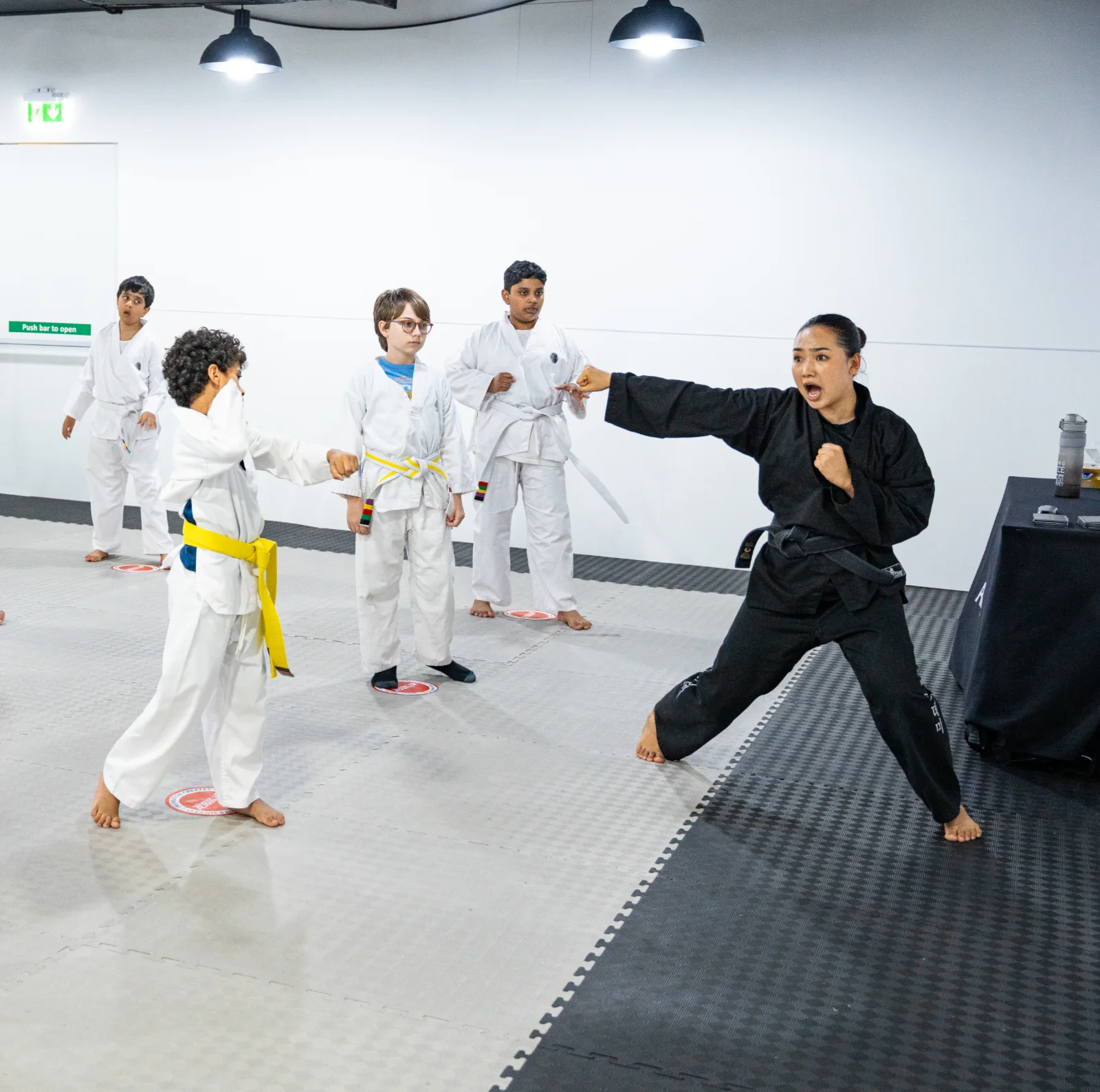
Concentration is one of the 3 C’s taught in every session at The Warrior Academy, alongside confidence and conduct. In our Junior Warriors programme for ages 4 to 6, children practise listening to an instructor, holding still in a ready position and following short sequences of moves. Groups are kept small, so instructions are clear and every child is seen, and we stay in close touch with parents. For younger children, see Little Warriors for ages 2 to 3.
Frequently asked questions
Why does my child listen to their teacher but not to me? Very common. Teachers use clear routines, short instructions and consistent follow through, and home is where children relax. Borrow the classroom approach.
Is counting to three a good idea? It can work well, as long as you act at three every single time.
Should I reward my child for listening? Specific praise and natural rewards, like getting to the park sooner, tend to work better than sweets or toys.
What if my child has ADHD or a hearing problem? Speak to your child’s doctor or school for proper advice. The steps above are still worth using alongside it.
Once, calmly, up close
Pick one step from this article and use it every day this week, starting with walking over instead of calling out. If you would like to see how we build concentration on the mat, Book a trial experience.