

When parents tell us what they want for their child, discipline comes up again and again. Most are not describing unruly children. Many say their children behave beautifully at school or at friends’ houses. What they want is a child who can follow structure, show respect and courtesy, and bring that same behaviour home without constant reminders.
This article is about discipline for kids in that positive sense: the rules, routines and expectations that help children thrive. If your main concern is your child’s ability to manage impulses and emotions in the moment, read our companion guide on how to teach self-control to children.
What discipline for kids really means
The word discipline comes from the same root as disciple: someone who learns. Good discipline is not about punishment. It is about teaching. A disciplined child is one who understands the expectations, knows why they matter and chooses to meet them.
Discipline usually includes:
- Structure: knowing what happens when, and what is expected
- Respect: treating adults, other children and property well
- Courtesy: manners, listening and taking turns
- Responsibility: doing what you said you would do
Why discipline can feel like a daily battle
Most families in Dubai and Abu Dhabi live busy lives. School runs, activities, screens and changing routines can make consistency hard. Children test boundaries because that is how they learn where the boundaries are. When the answer changes from day to day, they keep testing.
Common sticking points include:
- Getting ready for school on time
- Screen time limits
- Homework and practice
- Bedtime
- Talking back or ignoring instructions
The good news is that a few clear principles make a big difference.
Seven principles of positive discipline
1. Make expectations clear and few
Children cannot follow rules they cannot remember. Choose three to five family rules, write them down and put them where everyone can see them. “We speak kindly”, “We put things back where they belong” and “Screens off at dinner” are easier to follow than a long list of don’ts.
2. Be consistent
Consistency is the single most important part of discipline. If a rule applies on Monday, it applies on Saturday. If both parents and any carers at home agree on the same rules and responses, children stop testing so often.
3. Build routines
Routines remove arguments. When getting dressed, brushing teeth and packing a bag happen in the same order every morning, there is less to negotiate. Picture charts work well for younger children.
4. Explain the why
“Because I said so” teaches obedience. “Because it keeps you safe” or “because it’s fair to your sister” teaches understanding. Children who understand rules are more likely to follow them when you are not there.
5. Use natural consequences
If toys are not put away, they go on the shelf for a day. If homework is not done, there is less free time. Consequences should be calm, linked to the behaviour and delivered without lectures.
6. Catch them being good
Children repeat what gets attention. Notice and name good behaviour as often as you correct poor behaviour: “Thank you for listening the first time” is a powerful sentence.
7. Model it yourself
Children learn more from what we do than what we say. Speaking respectfully when frustrated, keeping promises and putting your own phone away at dinner all teach discipline better than any rule.
Discipline at every age
Ages 4 to 6
Keep rules simple and routines visual. Give warnings before transitions (“Five more minutes, then shoes on”). Short, calm time out to reset works better than long explanations at this age.
Ages 7 to 9
Involve children in making family rules. They are far more likely to follow rules they helped create. Introduce simple responsibilities like setting the table or looking after their own uniform.
Ages 10 to 13
Explain the reasons behind rules and allow some negotiation on the small things. Link privileges, such as extra screen time or later bedtimes, to showing responsibility.
Teenagers
Teenagers respond to respect. Agree expectations together, give more freedom as trust is shown and focus on the few rules that really matter for safety and family life.
Why martial arts is such a strong environment for discipline
Martial arts is built on discipline, respect and a high standard of personal conduct. At The Warrior Academy, children train in an environment where the way instructors speak to students, and the way students speak to each other, is always respectful and courteous. Children stand in lines, listen to instructions and wait patiently for their turn to hold pads. Because everyone does it, it quickly becomes normal.
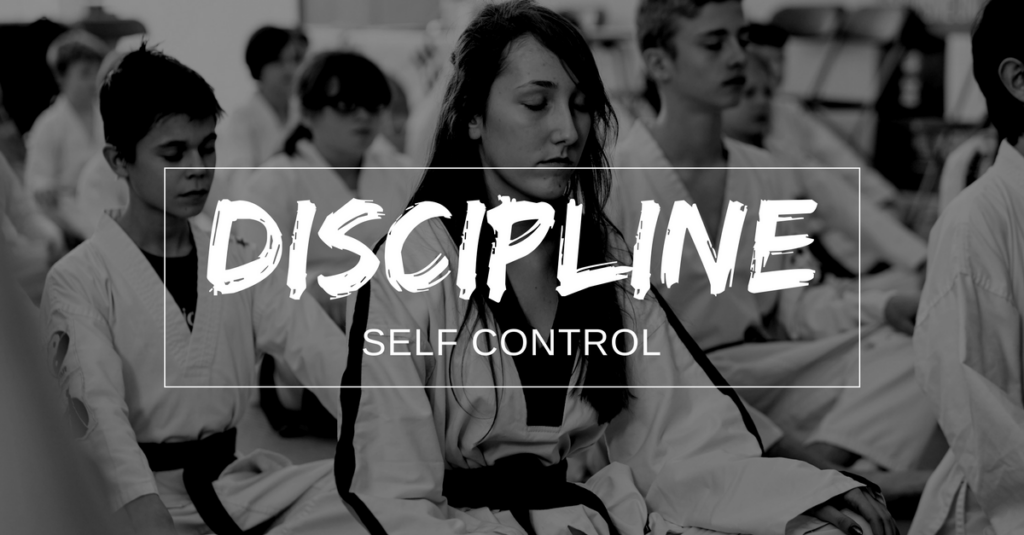
Self-control is one of the first things we work on. Through calm, focused drills, children learn that one of the most important things they can control is their own mind. Students take on a challenge to sit quietly in their sitting position, eyes closed, with no talking or fidgeting for up to five minutes. Once they can do it, they use the same focus to rehearse a technique before they perform it.
We also recognise character at gradings. Alongside their techniques, students earn stars for showing our Warrior values: self-control, respect, perseverance and leadership. Discipline is not just expected, it is noticed and rewarded, which is exactly what makes it stick. You can read more about this in our character development approach.
Many parents tell us their child starts bringing the same habits home: listening the first time, tidying up and speaking more politely. Our kids martial arts programmes start with Little Warriors for the youngest children and continue through junior, pre-teen and teen programmes.
My child struggles to concentrate for more than a minute
Please don’t worry. We work with many children who find it hard to focus. Our sessions are fun, active and varied, and our instructors are skilled at keeping children engaged while gently building their ability to concentrate a little longer each time. Small steps, repeated regularly, add up.
Frequently asked questions
Is discipline the same as punishment?
No. Punishment focuses on the past. Discipline focuses on teaching better choices for the future. Clear expectations, routines and calm consequences are far more effective than shouting or harsh punishments.
What is the difference between discipline and self-control?
Discipline is about following structure and expectations, often set by adults. Self-control is the inner skill of managing impulses and emotions. They support each other, and our guide to teaching self-control to children goes into the second in detail.
How quickly will I see a change?
When rules and routines are consistent, many families notice a difference within a few weeks. The key is sticking with it, even on busy days.
Take the next step
Take our free Breakthrough Area assessment to see where your child could grow the most. Then book a VIP Pass at your nearest academy in Al Quoz, Arjan, Jumeirah Islands or Abu Dhabi and see how a structured, respectful environment can help your child thrive.