

Safe Striking in Martial Arts Training
One of the biggest concerns for any parent with a child in martial arts is safety. Whether it’s weekly training or competitions, everyone wants to know their child is protected. Luckily, that’s where experience, expertise, and preparation can shine through and ensure that karate, taekwondo, and other martial arts remain one of the safest activities for your child. In fact, studies found that the most common injuries in children’s martial arts occur to the lower leg, foot, and ankle (30.1%), followed by hand and wrist injuries (24.5%).
These are precisely the areas that proper protective equipment is designed to safeguard, meaning that investing in good body protection can significantly reduce the risk of injury while also allowing children to train with full commitment, building the confidence and discipline that make martial arts such a powerful developmental tool.
Below, we’ll explore the gear your child needs, why it matters, and how to choose equipment that provides genuine protection without hindering movement or comfort.
Understanding the Need for Protective Equipment
So, where do we begin.
Studies reveal that martial arts injury rates vary significantly based on training type, with non-contact forms carrying a lower relative risk. These same studies demonstrated that martial arts athletes younger than 18 who trained less than 3 hours per week experienced minimal serious injuries, particularly when proper safety protocols were followed.
When it comes to injuries, the most common causes of martial arts injuries are being kicked (25.6%), followed by falling (20.6%) and kicking itself (18.0%). These numbers tell us exactly where protection is needed most. More than just statistics, though, proper protective equipment serves a psychological function. When children feel physically safe, they’re willing to attempt new techniques and practise with full commitment. This confidence accelerates learning and helps students progress more quickly through their belt rankings, building self-assurance that extends far beyond the dojo.
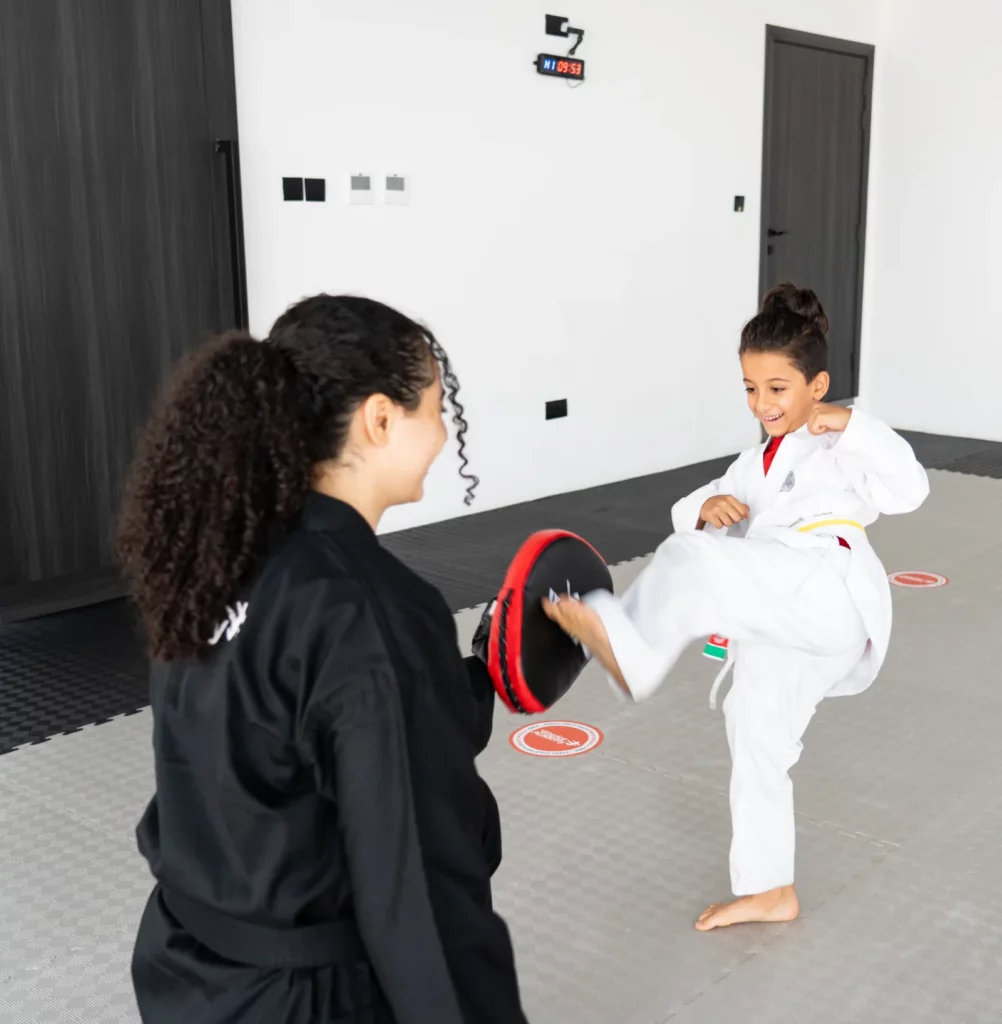
Shin Guards: Foundation of Safe Striking
Shin guards are one of the most critical pieces of protective equipment. The shin bone has minimal natural padding, making it vulnerable to painful impacts during both offensive techniques and defensive blocks. Modern shin guards are designed specifically to guard against this with professional-grade padding in sizes that maximise mobility and comfort.
Quality shin guards protect the shin bone itself whilst also shielding the instep during kicks and reducing impact when blocking opponents’ techniques. They allow students to practise full-power techniques safely, which is crucial for proper skill development.
When selecting shin guards, look for high-density foam padding that absorbs impacts whilst remaining lightweight enough not to impede movement. Secure strapping systems that stay in place during activity are non-negotiable, as constantly adjusting equipment disrupts training and can leave children vulnerable at the wrong moment.
The coverage should extend from below the knee to the ankle, with breathable materials to prevent overheating during intense sessions. Youth-specific sizing ensures proper fit rather than forcing children into scaled-down adult equipment that never quite works right.
At Warrior Academy, instructors ensure that all students wear appropriately fitted protection during sparring or any other contact training. This creates an environment where children can push their limits safely, building skills without unnecessary risk.
Knee Protection: Safeguarding Growing Joints
Another part of the anatomy to guard is the knee. This joint goes through a lot of change as children grow, and coupled with the injuries from kicking it makes sense to protect your knees. To help with this, students often use knee pads for contact and groundwork.
The compression support they provide for growing joints is often overlooked but equally valuable. Young athletes’ bodies are still developing, and proper support during physical activity helps prevent overuse injuries that can plague them later. When looking for knee protection, many options use hexagon-shaped padding technology that conforms to and moves with the body, providing continuous protection without restricting movement.
Quality knee pads should stay securely in place without constant adjustment, a feature that’s particularly important for children who need to focus on learning techniques rather than fiddling with equipment. They must allow full knee flex and extension for proper technique. Adequate cushioning without excessive bulk keeps protection practical rather than cumbersome, whilst moisture-wicking materials ensure comfort during extended training sessions.
Elbow Guards: Complete Upper Body Protection
While the legs are important to protect, so too are other joints like the elbow. Elbow guards play an equally important role in comprehensive martial arts safety as they protect vulnerable joints during blocking techniques and against impact during ground drills.
Head Protection & Mouth Guards
When contact training progresses to include head strikes or sparring, headgear becomes non-negotiable. These pieces of equipment absorb impacts that could otherwise cause pain or injury.
Quality headgear should provide adequate padding around the temples, forehead, and cheeks whilst maintaining clear visibility and hearing, as situational awareness is part of staying safe.
Equally important are mouth guards protecting not just teeth but also reducing the risk of jaw injuries and concussions by cushioning impacts to the lower face. Custom-fitted mouth guards offer superior protection and comfort compared to boil-and-bite varieties, making them worth the investment for children training regularly.
At Warrior Academy, instructors assess each student’s readiness for contact work individually and ensure that all gear is fitted for comfort and performance.
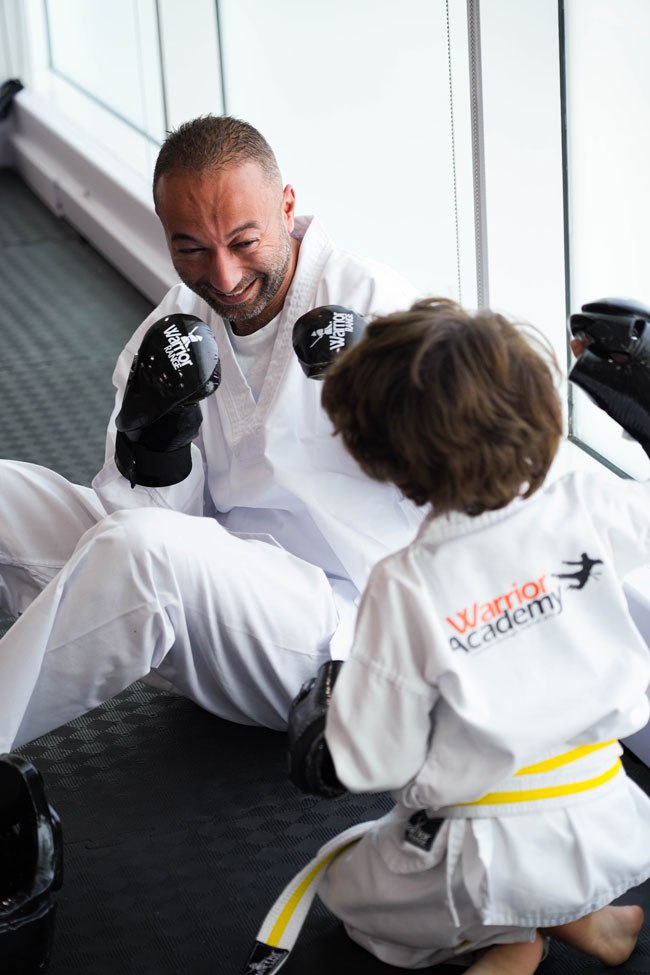
The Warrior Academy Approach to Safe Striking
With this in mind, safety isn’t an afterthought but rather the foundation upon which all training is built, particularly at Warrior Academy. Children begin with non-contact techniques, learning proper form and control before any sparring is introduced. This measured approach ensures that students develop the muscle memory and self-control necessary for safe partner sparring.
Research also suggests that proper instruction focused on technique and self-control represents one of the most effective injury prevention strategies. Instructors carefully advance students through increasingly complex training only when they’ve demonstrated readiness. This ensures that physical development keeps pace with technical demands, preventing situations where children attempt techniques their bodies aren’t yet prepared to execute safely.
All contact training requires appropriate protective equipment without exception. This policy ensures that every child benefits from proper protection, regardless of their prior martial arts experience. By maintaining consistent safety standards, we create an environment where parents can feel confident, and children can focus entirely on learning and improving.
Age-Appropriate Protection
So what can you expect based on your loved one’s level?
For young beginners aged 4 to 7, protection should prioritise comfort and simplicity. Children in this age group benefit most from basic non-contact training, with any protective equipment being lightweight and easy to wear independently. Simple slip-on shin guards with elastic straps work well, building the habit of wearing protection whilst avoiding complicated fastenings that frustrate little hands.
As techniques become more advanced for junior students aged 8 to 12, protection should evolve accordingly.
Teenage martial artists aged 13 to 17 often train with intensity approaching adult levels, necessitating professional-grade protection. At this stage, equipment should prioritise impact absorption and durability, with proper sizing to accommodate rapid growth whilst maintaining protective integrity.
Beyond Equipment: Creating a Culture of Safety
At Warrior Academy, every instructor undergoes rigorous training not just in martial arts techniques, but in child development, safety protocols, and age-appropriate progression.
Quality instruction includes proper warm-up and conditioning exercises, gradual skill progression, constant supervision, correction of unsafe techniques, and clear communication of safety expectations. Parents play their part too by ensuring equipment fits properly, arrives in good condition for each class, and is replaced when worn. Regular communication with instructors about any concerns helps maintain the safest possible training environment.
Evidence suggests that monitoring training hours can significantly reduce injury risk. Whilst dedicated practise builds skill, overtraining increases vulnerability to both acute injuries and overuse conditions. Warrior Academy’s structured curriculum balances intensity with recovery, promoting healthy development rather than burning out young bodies.
Maintaining and Replacing Protective Equipment
Protective equipment doesn’t last forever. Foam padding compresses with repeated impacts, straps wear and stretch, and materials degrade over time. Establishing a regular inspection routine ensures equipment continues providing adequate protection. Keep an eye out for compressed or flattened padding, stretched or damaged straps, tears in fabric or covering, persistent odours indicating material breakdown, and poor fits as your child grows.
As a general rule, protective equipment should be replaced annually for actively training children, or sooner if damage is visible. Growing children may need replacement even sooner due to size changes. Quality martial arts equipment represents an investment in your child’s safety and shouldn’t be compromised by using worn-out protection.
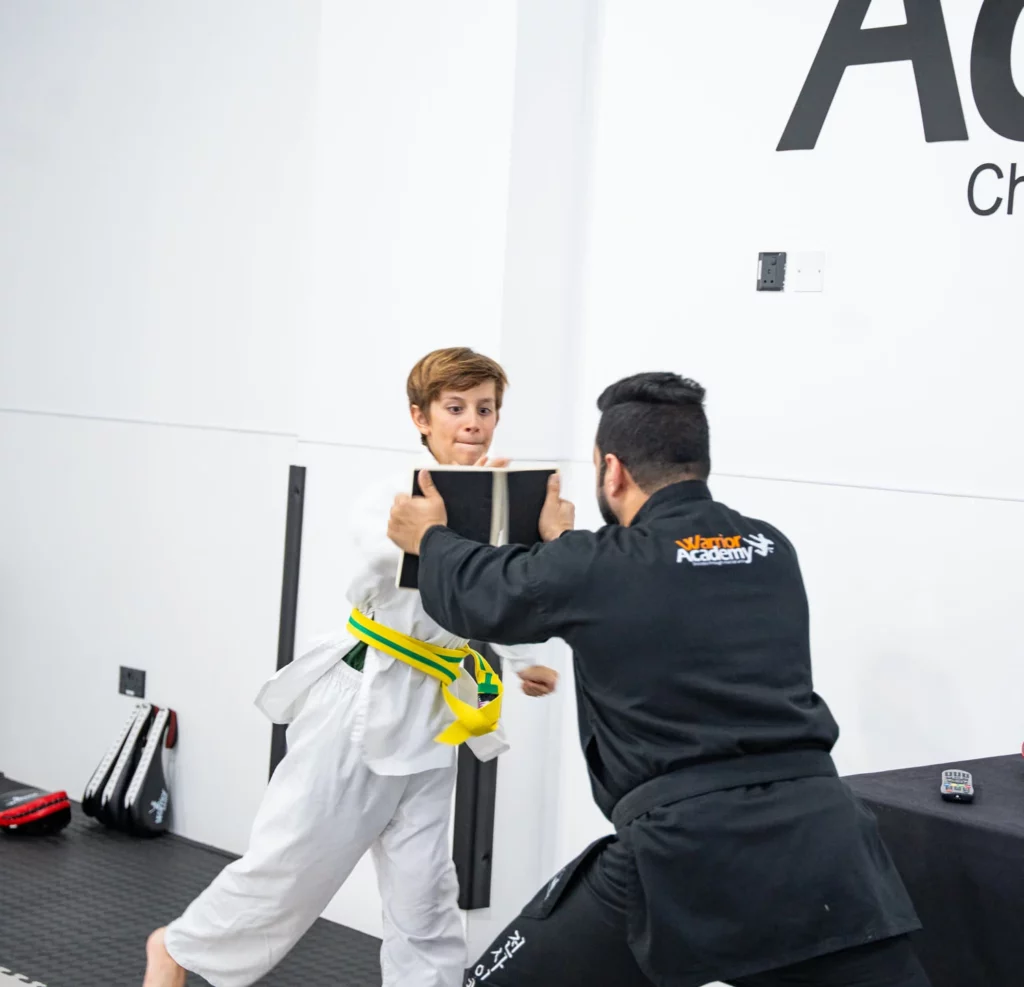
The Long-Term Benefits of Safe Training
When children learn martial arts in a safety-conscious environment, they absorb the value of injury prevention. This awareness extends beyond the dojo. Children who understand the importance of protective equipment in martial arts are more likely to wear helmets whilst cycling, use appropriate gear for other sports, and generally make safer choices throughout life. Research demonstrates that martial arts training builds confidence, but this confidence must be built on a foundation of genuine safety.
Children who feel physically secure during training develop real self-assurance based on skill development, not reckless bravado. This measured confidence serves them well in all areas of life, including overall physical fitness, strength, flexibility, and coordination. However, these benefits can only grow when children train consistently over time. Proper protective equipment prevents injuries that might otherwise interrupt training, allowing continuous progression and maximum developmental benefits.
Protection Enables Progress
Safe striking and comprehensive body protection enable rather than obstruct martial arts training. When children feel physically secure, wear appropriate equipment, and train under qualified instruction, they’re free to push their limits, attempt challenging techniques, and develop skills that build discipline, confidence, and character.
At Warrior Academy, we’re committed to providing the safest possible training environment where children can discover their potential. Through mandatory safety equipment standards, gradual skill development, and expert instruction, we ensure that every child can pursue martial arts excellence whilst parents can rest assured their young athlete is properly protected.
Ready to give your child the gift of martial arts training in a safety-first environment? Book a free trial class and see how Warrior Academy combines expert instruction with comprehensive safety protocols to develop confident, capable young martial artists.