

When most parents think of martial arts classes, they might picture stern instructors barking orders or worry about their child getting hurt in training. But what if we told you that modern martial arts training—particularly at places like Warrior Academy offering jiu jitsu programs in Dubai looks very different from these outdated stereotypes?
We sat down with Charlie Fairhead, a trainer at Warrior Academy, to get an inside look at what happens during martial arts classes and how karate, jiu jitsu, and other martial arts practices are transforming children’s lives both inside and outside the dojo.
Breaking down the classroom: Structure meets respect
The rituals of respect
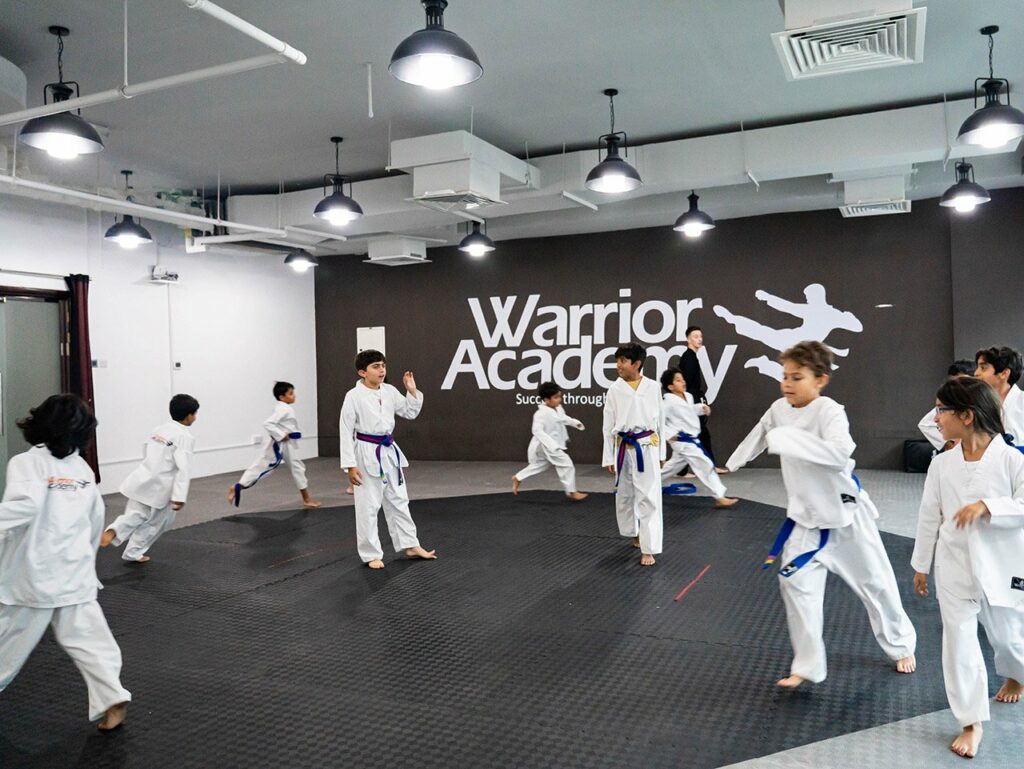
Every class at Warrior Academy begins and ends with intentional practices that go far beyond tradition. When students enter the dojo, they remove their socks and shoes; a practice that teaches mindfulness about transitioning between spaces, and respect. They bow too which reinforces this respect for the learning environment.
“We tell the students that if you don’t have this room, then you’ll be outside training in the heat,” Charlie explains. “So you’ve got to be grateful for what you have.”
This gratitude extends throughout the class structure. Students and instructors bow to each other at the beginning of each session, showing a mutual acknowledgement of respect that breaks down traditional barriers.
Mutual respect: Not what you’d expect
Perhaps most surprisingly, the instructor-student relationship at Warrior Academy challenges traditional expectations. Instructors address students as “sir” or “miss,” while students use formal titles like “Instructor Charlie”.
“There’s that same level of respect,” Charlie notes. “If the students are calling trainers by their formal name, it’s only right for the instructor to address that child as ‘yes sir, how can I help?’ It doesn’t matter if the instructor is in their 60s and a five-year-old is talking to them—they still have that same level of respect for each other.”
This approach is one that highlights the unique makeup of Warrior Academy’s sessions. But it doesn’t end with traditions and greetings.
Here’s a breakdown of how a regular session may go.

A Class breakdown: More than just fighting
A typical Warrior Academy class follows a structured format designed to develop mind and body:
- Individual techniques and combinations
Students learn fundamental martial arts moves, progressing from basic techniques to complex combinations as they advance.
- Self-defence training
Unlike competition-focused moves, our self-defence classes prepare students for real-world situations. “We use the phrase that kids are often bubble-wrapped in the UAE,” Charlie explains. “We’re giving them that sense of what it’s like outside and those tools to defend themselves.” These techniques are practised individually at first to foster familiarity before any sparring.
- Leadership development
Following this, every student gets a turn to lead the class, from the highest belt to the newest beginner. Whether teaching a new martial arts move or just leading ten star jumps, this exercise builds confidence and public speaking skills. “Some students are very quiet and reserved, but others have so much confidence they’re like, ‘back off, I’m going to smash this’—it’s their 30-second moment to shine.”
- Fitness testing
Physical exercise is next with age-appropriate physical challenges, including push-ups, sit-ups, squat jumps, and planks, which help students build strength and endurance while tracking their progress. These tests remain constant with the overall number of exercises and intensity stepping up as students progress.
- Controlled sparring
Following this, students practice the techniques they have learned with protective gear in a controlled environment that simulates competition while prioritising safety and learning. All of this is overseen by trainers to ensure everyone’s safety is paramount.
- Concentration training
As a means of cool down, and mental training, classes then lead into concentration. Similar to meditation, students sit in silence with eyes closed for up to five minutes, a significant challenge in our device-dominated world. “Even for us adults, being away from a phone or laptop for five minutes is a big issue,” Charlie observes. This can also be tricky for younger students, but by starting early, trainers can help students practise and become more natural with breathing and concentration exercises.
- Mat chat
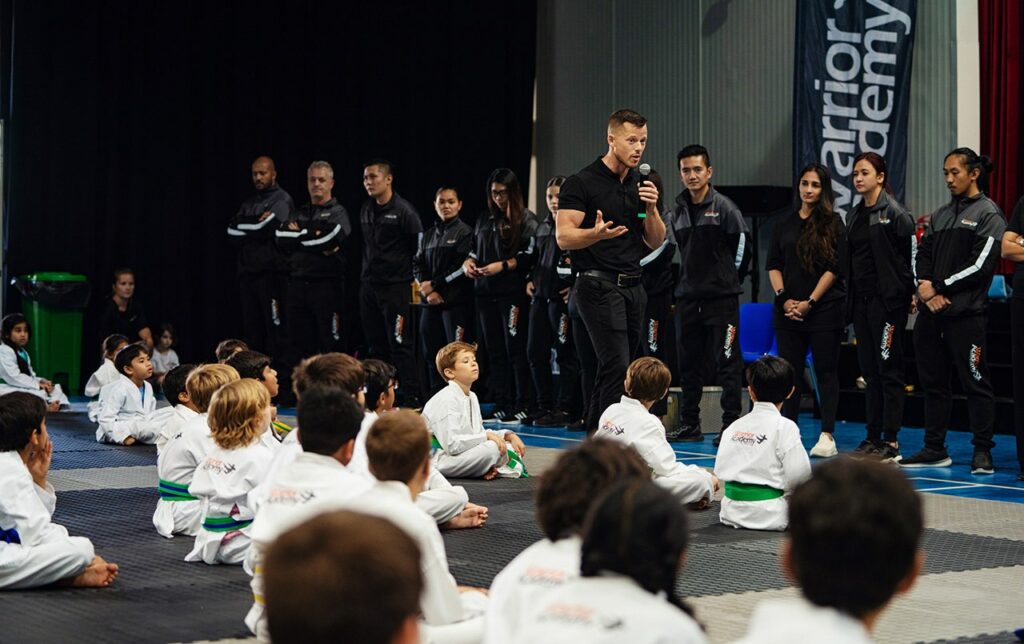
Finally, before wrapping up, is the mat chat. This is one of the most important segments in Charlie’s opinion. Structured as an informal, two-minute discussion, the mat chat sees students and trainers sit together in a circle and focus on character development themes like teamwork, patience, or critical thinking, through storytelling. Thi
Seven steps for success
These seven steps are how an average session will be run and show just how modern and holistic martial arts classes can be for your children. Next, we’ll take a look at some of the misconceptions and misunderstandings to help clear up any questions you may have.
Discipline without intimidation
Handling misbehavior constructively
When students misbehave, Warrior Academy takes a thoughtful approach that avoids traditional punishment methods. Rather than isolating children or using the meditation position as punishment, instructors modify activities—perhaps limiting sparring techniques or excluding students from certain games.
The real intervention happens after class through honest conversations with parents. “Rather than just dismissing it, we want to try and get to the root cause of what’s making them react in that way,” Charlie explains. “Maybe they’re tired, maybe they’re hungry, maybe they had a long day at school, or is everything okay at home?”
This creates a triangle of communication between Warrior Academy, parents, and schools to support each child’s development. As the adage goes, ‘It takes a village to raise a child.’
Adapting ancient practices for today’s world
The framework of tradition with modern practices is what gives Warrior Academy this unique approach. “When I first joined, it was difficult to get my head around because I came from a very traditional martial arts background where when the instructor’s talking, there’s no talking,” Charlie reflects.
“What we try to encourage is that friendly community and friendly environment. If not all students can see the demonstration, we gather them in a circle so every single student can see what we’re doing.”
Building community across differences
One particularly innovative approach involves creating specialised classes for children with challenges like ADHD, autism, or Down syndrome. Rather than isolating these children, Charlie creates community classes where 10 kids with similar challenges can train together.
“Those kids really get on well with each other because they all understand each other’s challenges. The parents understand all the kids’ challenges. And that class has actually got more buzz than the other classes,” he explains. “You see, when they leave the class, they’re actually socialising and doing playdates, meeting people they wouldn’t necessarily meet.”
Perhaps the most compelling aspect of Warrior Academy’s approach is its strategic use of parent observation. Parents attend the first class, then aren’t allowed back into the classroom for three months—until their child’s first belt assessment.
“The parents will be like, ‘It’s a completely different child. After three months, wow, what have you done?” Charlie describes. “Whereas lots of other academies let parents inside every single class, and the parents don’t see that change. They just see going through the motions and pick up on the faults.”
This approach forces children to make the space their own while giving parents a dramatic before-and-after view of their child’s development.
Busting common misconceptions
Myth 1: Martial arts are violent and aggressive
Myth 2: Instructors are intimidating
Reality: Modern martial arts classes focus heavily on character development, respect, and controlled practice. While sparring occurs, it’s carefully supervised and safety-focused.
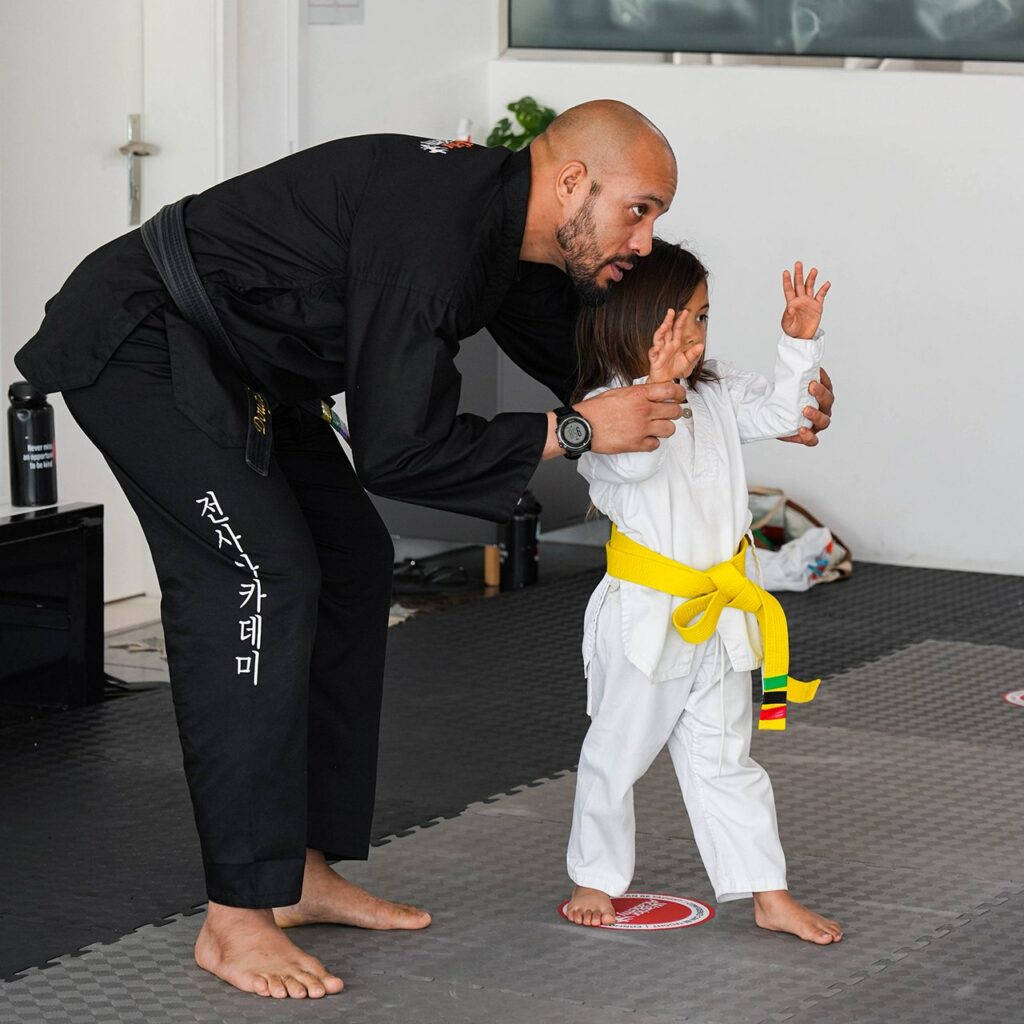
Reality: Instructors get down to students’ level—literally and figuratively. They show mutual respect and create welcoming environments, especially for nervous first-time students.
Myth 3: Results happen overnight
Myth 4: Parents aren’t involved
Reality: Character development takes time. While some changes appear within three weeks, most significant improvements occur after six to seven weeks of consistent training and parent involvement.
Reality: While parents aren’t present during regular classes, be it karate, jiu jitsu or other disciplines, (to prevent distraction), they’re crucial partners in their child’s development. Regular communication and home reinforcement are essential.
The unique family experience
Another unique class at Warrior Academy is the Family Martial Arts Class. Recognizing the unique dynamics of UAE family life—where one parent is often the breadwinner while the other manages household affairs with help from nannies and drivers—Warrior Academy offers something special to bring families together.
“About 40% of our students, it’s not until halfway through a child’s journey with us that we don’t actually meet the parent in person because it’s always a driver and nanny bringing the student,” Charlie notes.
Family classes create opportunities for busy parents to engage with their children in a structured environment. The dynamic is fascinating: children who attend regular classes often become the teachers, showing their parents techniques and leading them through exercises.
“The kids actually know more than the parents, so it’s really nice to see because the kids will lead their parents and show them what to do,” Charlie observes.
This helps strengthen bonds between families, allows for mutual growth physically and emotionally, and allows the students a space to express themselves and feel pride over what they have accomplished.
Setting realistic expectations: What parents need to know
So if you’re considering martial arts classes for your child, here are realistic expectations based on Charlie’s experience:
- Initial nervousness is normal: First-time students often feel intimidated by instructors in black uniforms. This passes quickly with proper support.
- Minor bumps and bruises happen: Like playground activities, martial arts involve physical movement where small accidents can occur.
- Consistency matters: One class per week isn’t enough. Regular attendance plus home reinforcement accelerates development.
- Every child progresses differently: Some show confidence improvements in three weeks, others need ten weeks or more.
- Parent involvement is crucial: The more parents engage with homework, assessments, and communication, the better their child’s outcomes.
The bottom line: Modern martial arts as character education
What emerges from Charlie’s insights is a picture of martial arts training that’s fundamentally different from popular stereotypes. Rather than promoting aggression or blind obedience, programs like Warrior Academy use traditional martial arts structures to address distinctly modern challenges: building confidence in anxious children, developing focus in distracted students, creating community across cultural divides, and teaching respect.
For parents in Dubai or the greater UAE considering martial arts for their children, the question isn’t whether your child will learn to fight—it’s whether you’re ready for them to develop the confidence, focus, and respect that will serve them throughout their lives.
Interested in learning more about Warrior Academy’s approach? Visit our website to explore our age-appropriate programs or learn about the philosophy behind the Warrior Method. Ready to get started, schedule a trial class for your child today and see what change becoming a warrior can make in their lives.