

As 2026 rolls on, people across the UAE are making the same promise: exercise more, eat healthier, build better habits. But here’s what the data shows, 92% of adults won’t follow through on their New Year’s resolution ideas.
So what’s going wrong? More importantly, how can we help our kids and ourselves create lasting change with New Year’s resolutions?
The Numbers Tell a Clear Story
Drive Research data shows that whilst three in ten Americans made resolutions in 2024, only 9% maintained them throughout the year. Even more concerning, 23% quit by the end of the first week.
YouGov’s survey found similar results in the UK, with only 19% of Britons planning to make resolutions for 2026. Health tops the list too, with 23% wanting to get fit or exercise more, and 17% aim to lose weight. Young people show the most enthusiasm, with 37% of 18-24 year olds setting goals.
But here’s the real question: if everyone knows what they should be doing, why do so few people actually do it?

Why New Year’s Resolutions Fail: The Psychology
Traditionally, New Year’s resolution ideas fail because they rely on what psychologists call “System 2” thinking, conscious, deliberate decision-making requiring constant willpower and motivation, as opposed to “System 1”, which is more intuition and pattern-recognition thinking.
Research in the British Journal of General Practice shows this approach is flawed because motivation naturally fades over time as a result of:
Vague Goals: Saying “I want to exercise more” lacks clarity. What does “more” mean? When? Where? Without targets, our brains can’t turn intentions into actions.
All-or-Nothing Thinking: Missing one workout leads many to abandon their entire goal. Research shows that missing once has no measurable impact on long-term progress, yet people use a single slip as justification to quit.
Too Much at Once: People often set multiple, complex resolutions simultaneously. James Clear notes that starting with something so difficult that you need constant motivation to maintain it leads to failure.
No Accountability: According to Drive Research, only 20% actively keep themselves accountable. Without external support, commitments easily slide. Working on a resolution with someone else can help with this.
These self-sabotaging habits are why resolutions fail, so recognising them is the first step to better resolution and goal management.
The Science of Habits: A Better Way Forward
Rather than relying on passing motivation, habit formation research suggests creating automatic behaviours triggered by consistency. When an action becomes habitual, it no longer depends on motivation or willpower; it simply becomes what you do.
The process is simple: repeat a chosen behaviour in the same context until it becomes automatic. Studies show habits typically take around 66 days to form (roughly 10 weeks), though this varies by complexity.
What works for successful habit formation:
Start Small: James Clear teaches to “make it so easy you can’t say no.” Rather than committing to hour-long daily workouts, start with five minutes. Make the behaviour simple enough that motivation isn’t required.
Choose Consistent Contexts: Link your new behaviour to a specific time and place you encounter every day. Research explains that habits form through associative learning. When you repeatedly act in the same context, your brain automates the behaviour.
Expect Setbacks: Research confirms that missing once has no measurable impact on long-term success. Getting back on track quickly matters more than striving for perfection.
Focus on Identity: Instead of fixating on “I want to lose 10 kilos,” shift to “I am someone who moves their body every day.” This creates more lasting change.

Why Martial Arts Works
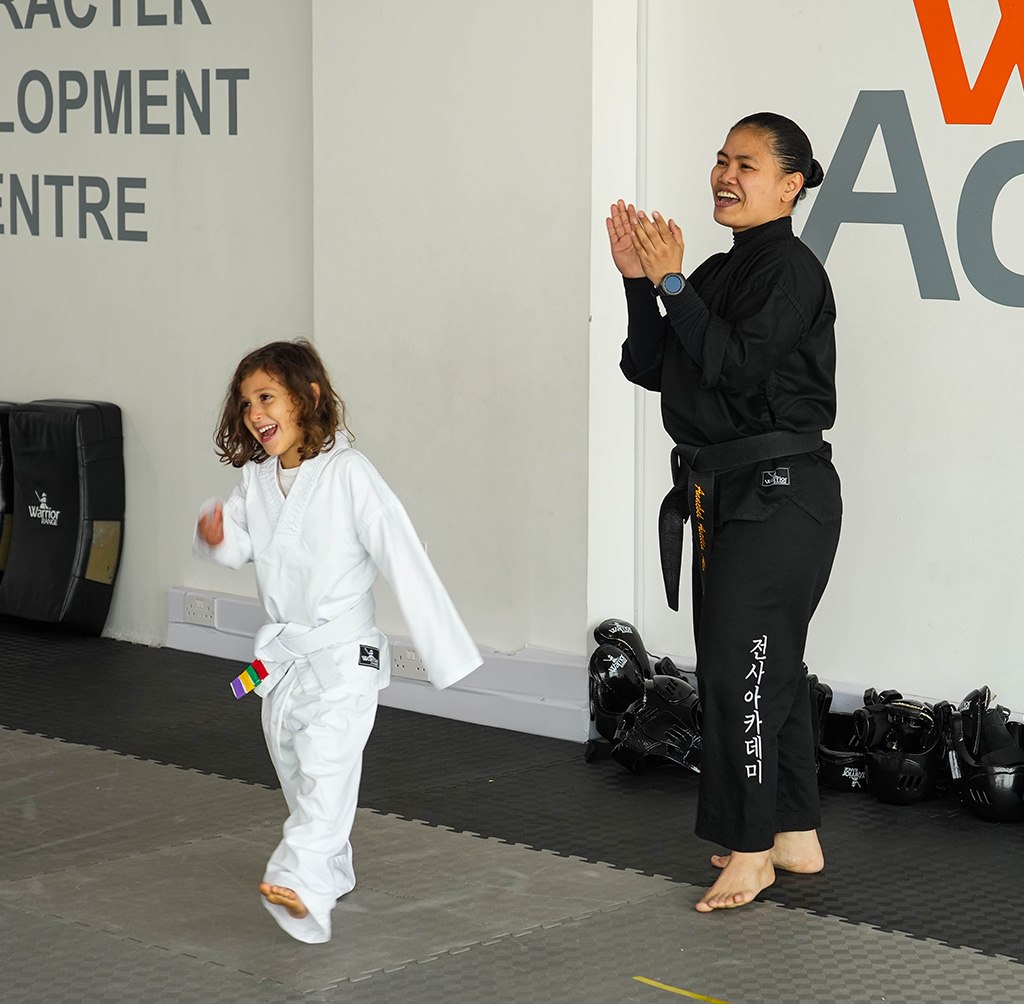
This is where martial arts, particularly programmes like those at Warrior Academy, shine. Our training courses are not just about learning to kick and punch; they’re sophisticated systems that build physical, emotional, and mental strength through habits and practices. This makes our classes Ideal for parents and kids to practice New Year’s resolutions and follow through with their aims.
Here are some of the ways we ensure success:
Built-in Consistency: Training happens at the same location, at scheduled times, with the same instructors and peers. This consistency is exactly what habit research identifies as necessary for automation. You don’t decide whether to exercise today, Tuesday at 4 pm means martial arts class. The decision is already made.
Clear Progress: Martial arts naturally follow the “1% improvements” philosophy. From white belt to black belt, students progress through defined stages. Each achievement, learning a new technique, or earning a new belt, builds confidence and motivation.
Natural Accountability: Missing a class is immediately noticeable to instructors and peers. This social accountability, which Drive Research identifies as used by only 35% of resolution-makers, is built into the structure.
Genuine Enjoyment: Research shows that behaviours chosen for personal value (rather than external demands) are easier to maintain as habits. Children genuinely enjoy martial arts, the games, the challenges, and the sense of achievement. This motivation carries them through days when external motivation might flag.
Family Participation: Warrior Academy offers family martial arts classes, creating shared habits and accountability. When the whole family commits to training together, you’re not just building individual habits; you’re creating a culture of health within your home.
Beyond Physical Fitness: Building Character for Life
What makes our approach effective is our focus on character development alongside physical training.
Traditional martial arts values like discipline, respect, perseverance, and courage aren’t just abstract concepts. They’re exactly what’s needed to maintain any challenging habit. When children learn to push through difficulty in training, they develop resilience to persist with other goals. When they practise discipline in following dojo rules, your little ones build self-control needed for healthier habits. As our character development philosophy emphasises, legacy isn’t just what happens in the dojo, it’s what students do when they leave that matters.
Making 2026 Different: A Practical Approach
So, if you’re reading this in January or February, or any other time of the year, and you’re feeling your motivation slip away, don’t despair. Research is clear: you can restart any time, and missing a few days doesn’t doom your efforts.
Here’s a practical framework:
Set One Priority: Rather than multiple resolutions, identify the one change with the biggest impact. For many families, regular physical activity creates a cascade of positive effects, such as better sleep, improved mood, healthier eating, and increased energy.
Make It Specific: Instead of “exercise more,” commit to “attend martial arts class every week” Specificity removes decision-making friction.
Start with Your Children: Research shows young people are most likely to stick with resolutions. Children are remarkably adaptable and form habits more quickly than adults. Starting them in a structured programme often inspires parents to join.
Use the 10-Week Rule: Expect that building a genuine habit will take around 10 weeks of consistent practice. Mark it on your calendar. You only need to maintain motivation for 10 weeks; after that, the habit starts to maintain itself.
Build in Recovery: Research confirms that occasionally missing your chosen behaviour doesn’t derail progress. What matters is getting back on track quickly rather than using one missed session as an excuse to quit.
Taking the First Step
At Warrior Academy, we operate across multiple locations in the UAE, including Dubai (Al Quoz and Arjan) and Abu Dhabi, offering programmes for every age in convenient locations.
From Little Warriors classes for the youngest students to Teen Martial Arts and Family Classes, there’s a pathway for every family member.
We start every new student with an informal introduction call to establish goals and values before acceptance. This thoughtful approach ensures alignment between students and instructors, setting everyone up for long-term success.
The Truth About Change
This January, millions worldwide are making the same promises they made last year. Most will fail, not because they lack desire or character, but because they’re using strategies that brains don’t respond well to.
The science is clear: lasting change comes not from willpower, but from building systems that make the right behaviours automatic. Martial arts training provides exactly this, a structured, social, progressively challenging system that transforms health and fitness from a daily decision into an ingrained habit.
For families in the UAE looking to make 2026 different from 2025, the question isn’t whether to make resolutions. It’s whether you’re ready to replace temporary promises with permanent habits.
Ready to turn your family’s health goals into lasting habits? Book your introduction call with Warrior Academy today and make your resolution, resolute.